

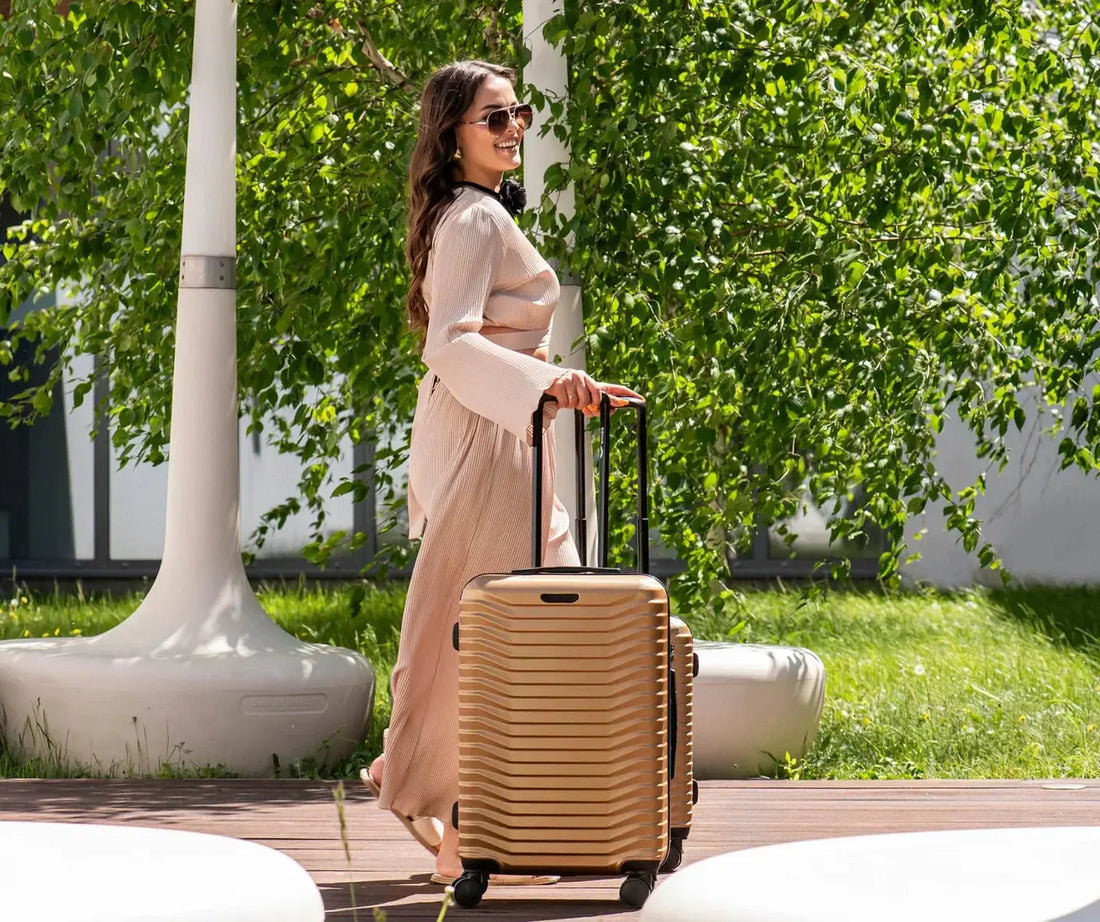
Why is a polycarbonate suitcase a great choice? The advantage of polycarbonate over ABS in terms of durability and quality
Updated: LW Lena WernerA WINGS brand expert in travel luggage, specializing in selecting suitcases, accessories, and practical solutions for travelers. She combines industry knowledge with a practical approach to travelers’ needs, focusing on durability, functionality, and comfort of use.Share
A polycarbonate suitcase is the best choice for those who want to combine durability, flexibility, and better build quality. ABS still has its place on the market, especially in more budget models, but when impact resistance, frequent travel, and longer lifespan matter, polycarbonate usually wins practically, not just in marketing.
Article summary:
- Polycarbonate withstands impacts and pressure better than ABS.
- ABS is often cheaper but more frequently means a compromise in durability.
- For checked luggage, the advantage of polycarbonate is most noticeable.
- The quality of a suitcase is also determined by the wheels, lock, frame, and service.
How does a polycarbonate suitcase differ from an ABS model?
Before moving on to purchase, it’s worth sorting out the basics. Many models look similar from the outside, but it is the shell material that largely determines how the suitcase will behave after several flights, in a car trunk, and during everyday use.
What is polycarbonate and why is it used in suitcases?
Polycarbonate is an engineering plastic valued for its high impact resistance, good thermal stability, and great mechanical strength. Industrial-grade material manufacturers emphasize that polycarbonate is intended for more demanding applications precisely because it withstands stress and tougher operating conditions well. In practice, this means that a polycarbonate suitcase has a better chance of surviving pressure, impact, and transport without permanent shell cracking.
What is ABS and when is it chosen by travelers?
ABS is also a popular technical plastic. It is described as hard, durable, and heat-resistant, and is widely used, among other things, in casings, functional parts, and precisely in luggage. Its major advantage is usually a lower price of the finished product, so for some customers, an ABS suitcase will simply be more accessible from the start. However, it must be honestly said that a lower price entry point often also means a greater compromise in resistance to harsher transport conditions.
Why does the appearance of a suitcase not yet say anything about its quality?
Two suitcases can have a similar color, similar embossing, and similar size, yet behave completely differently at the airport. The difference becomes visible only when the luggage is squeezed by other bags, moved along conveyor belts, and exposed to impacts. That’s why the quality of a suitcase should be judged not by its appearance alone, but by how the material responds to real stress. In the airline industry, baggage handling is a complex process involving many transfer and transport points, which in itself increases the risk of mechanical damage.
Why does polycarbonate outperform ABS in terms of durability?
The greatest advantage of the material becomes clear not in the store, but during travel. That’s when it shows whether the suitcase is just pretty or truly ready for intensive use.
How does polycarbonate react to impacts and pressure?
The biggest advantage of polycarbonate is that it handles impacts very well. Polycarbonate manufacturers describe this material as having high or exceptional impact resistance, even in tougher conditions. For the user, this means a simple benefit: when the suitcase takes a “hit” during transport, polycarbonate more often flexes and disperses the energy instead of cracking immediately. This is especially important for checked luggage.
Why does ABS more often lose out under intensive use?
ABS is a hard and useful material, but its characteristics tend to favor rigidity rather than the ability to “flex” under heavy load. That’s why with frequent flights and heavier use, an ABS suitcase may show its limits faster: deformations, microcracks, or permanent marks appear that weaken the structure over time. This doesn’t mean every ABS model is bad, just that under intensive use the safety margin is usually smaller than with polycarbonate.
Is suitcase flexibility a flaw or an advantage?
For many, a slightly “flexing” shell looks suspicious. Meanwhile, flexibility in a good suitcase is often an advantage, not a flaw. If the material can absorb impact energy and partially return to its original shape, the contents get better protection and the shell has a lower risk of cracking. That’s why polycarbonate is so highly rated in applications where impact resistance and mechanical durability matter.
Does a polycarbonate cabin suitcase make sense if it doesn’t go into the hold?
This is a common concern. Since the cabin suitcase flies with you, many people think the material doesn’t matter much. In practice, the difference is still noticeable.
What kind of damage is a cabin suitcase exposed to?
Cabin suitcase usually doesn’t go into the hold, but it is still exposed to many situations: being placed in overhead compartments, bumping against door frames, stairs, curbs, train floors, or bus luggage compartments. There’s also frequent lifting, sliding, and quick packing under time pressure. That’s why a cabin suitcase made of polycarbonate makes sense especially for people who travel often and want to avoid rapid wear.
Why is the quality of a suitcase felt more quickly on short trips?
During weekend and short trips, the suitcase is used very intensively: you often pull it, lift it, open it, close it, and then put things back inside. In such a mode, the quality of the material and workmanship is felt faster than during one longer trip a year. For someone who often chooses city breaks, cheap flights, and spontaneous trips, a cabin suitcase made of polycarbonate usually proves to be a wiser investment than the cheapest ABS suitcase.
Should checked luggage be made of polycarbonate?
Here the answer is even more straightforward. If the suitcase is to be checked, the material becomes crucial.
What happens to the suitcase during check-in and air transport?
In the airline system, luggage goes through several handling stages: check-in, sorting, transport, loading, unloading, and delivery. IATA emphasizes that baggage handling is a complex process, and the scale of transport is counted in billions of pieces annually. At such a scale, it is impossible to eliminate overloads, crushing, contact with other bags, or damage resulting from movement itself. Additionally, mishandling issues still occur, such as lost, delayed, and damaged luggage.
Why does polycarbonate better protect the contents of the suitcase?
If you check your luggage, you no longer control how the suitcase is handled. This is exactly when polycarbonate has an advantage because it handles impacts and pressure better than a more budget material. For the user, this translates not only into a greater chance of the shell itself surviving but also better protection for clothes, cosmetics, or more expensive items carried inside. This is also important because, although there are carrier liability rules for damaged luggage, the claims process does not undo the stress or lost travel comfort.
When can ABS still be enough for checked luggage?
ABS may be sufficient when you fly rarely, carry non-delicate items, and are looking for the most budget-friendly solution. It is a reasonable choice for some users, but only if you know what compromise you are accepting. However, if you value greater peace of mind, better quality, and longer lifespan, then checked luggage made of polycarbonate will be a safer direction.
How does polycarbonate perform in everyday use: weight, appearance, and comfort?
Durability is not everything. A good suitcase should also be comfortable, aesthetically pleasing, and cost-effective in the long run.
Is a polycarbonate suitcase heavier than ABS?
It is impossible to answer honestly with just one word because the final weight also depends on the frame construction, wheels, locks, and size. The polycarbonate material itself can offer a favorable balance between durability and weight, but not every polycarbonate suitcase will automatically be lighter than every ABS model. For the customer, something else is more important: whether the given weight actually corresponds to better durability. This is where polycarbonate most often proves to be the best.
Which material looks better longer after several trips?
Every suitcase can get scratched. It’s a normal sign of use, not a defect in itself. The difference is that with polycarbonate, the user more often gains better structural resistance, so even if minor marks appear, the suitcase’s shape retains functionality longer. In cheaper ABS models, the "material fatigue" effect can appear faster: stiffness remains, but aesthetics and the feeling of solidity decline more quickly.
Is the higher price of polycarbonate really worth it?
Most often yes, if you travel regularly. A more expensive material doesn’t always automatically mean a better product, but in the suitcase category, high shell quality usually translates into durability. In practice, this means less stress, lower risk of quick replacement, and greater comfort of use over several seasons. That’s why polycarbonate is more worthwhile for people who look at the purchase more broadly than just through the price at checkout.
What are the most common concerns before buying a polycarbonate suitcase?
Before buying, customers usually don’t only ask about the material. Often there are quiet doubts: is it worth paying extra, will scratches be visible, and will a budget model be enough "for my needs."
Does a more expensive suitcase really mean better quality?
Not always, but in the hard suitcase segment, the material really matters. If you pay more for polycarbonate, you usually pay for greater impact resistance, better shell flexibility, and a higher chance that the suitcase will keep its shape longer. Of course, besides the material, wheels, zipper, handles, interior, and service also matter. A good suitcase is a whole, not just a label with the material name.
Does polycarbonate scratch the same way as other materials?
Like other hard materials, polycarbonate can also scratch. It’s important to say this directly. The advantage of polycarbonate is not that it will remain visually perfect, but that it better withstands mechanical stress. For most travelers, resistance to cracking and maintaining functionality is more important than absolutely no signs of use.
Is ABS enough if I only travel a few times a year?
Yes, for some people ABS may be sufficient. If you travel occasionally, don’t carry particularly sensitive items, and are very budget-conscious, such a suitcase can serve its purpose. But if you already know you want to buy once and buy well, or plan more frequent flights, then a polycarbonate suitcase offers greater safety margin.
How to choose the right suitcase: cabin or checked luggage?
In the end, the user is not buying "material," but a specific product for their own travel style. Therefore, the decision is best based on the way you travel, not just the price.
When is a cabin suitcase made of polycarbonate better?
A polycarbonate cabin suitcase is a very good choice for people who fly for weekends, city breaks, short business trips, and frequent travels. Mobility, speed, and the certainty that the suitcase will not start looking worn after a few trips matter. For active travelers, it is a model that more often gives the feeling of "bought once, used for a long time."
When is it worth choosing larger checked luggage made of polycarbonate?
If you plan a longer vacation, a family trip, or simply regularly check your suitcase, checked luggage made of polycarbonate will usually be the most reasonable choice. Here the material advantage is simply more noticeable than in the cabin, because the suitcase faces heavier transport conditions.
What other elements besides the material should you pay attention to?
Besides the shell itself, check:
- wheel quality,
- lock type and smoothness,
- frame rigidity,
- handle comfort,
- interior layout,
- warranty conditions,
- service availability.
This is especially important because even the best polycarbonate will not save a suitcase if weak wear parts fail.
Why is it worth buying a suitcase in a store that understands the realities of traveling?
A good purchase does not end at the moment of payment but only when the suitcase actually performs well during travel. Therefore, not only the product but also the seller's experience matters.
Why does warranty and post-warranty service matter?
A customer buying a suitcase does not want to be left alone with a problem after a few months. Warranty and post-warranty service increase the sense of security and have real importance for products used intensively. It is an element of quality in the offer, not an add-on.
What does a quick comparison of polycarbonate and ABS look like in practice?
For many people, the best shortcut is a simple comparison. Below we present a table that organizes the main differences between a polycarbonate suitcase and one made of ABS material.
|
Which suitcase to choose depending on your travel style?
Not everyone needs the same. A student flying twice a year buys differently than someone who regularly commutes between airports.
|
User type |
Best choice |
Why |
Recommended luggage type |
|
Occasional traveler |
ABS or basic polycarbonate |
Low budget may be a priority |
Cabin suitcase |
|
Person flying several times a year |
Polycarbonate |
Better price-to-durability balance |
Cabin suitcase / medium suitcase |
|
Frequent flyer |
Higher quality polycarbonate |
Highest resistance and more peace of mind |
Cabin suitcase + checked luggage |
|
Couple on city breaks |
Light polycarbonate suitcase |
Convenience, mobility, frequent use |
Cabin suitcase |
|
Person going on a long vacation |
Hard polycarbonate suitcase |
Better protection when checked in |
Checked luggage |
How to make a good purchase decision step by step?
If you’re still unsure, use this simple scheme.
|
Step |
Question |
Conclusion |
|
1 |
How often do you travel? |
The more often you travel, the more polycarbonate pays off |
|
2 |
Do you need a cabin suitcase or checked luggage? |
Material matters even more for checked luggage |
|
3 |
Do you want to buy the cheapest or the best for the long term? |
If durability and quality are priorities, the choice usually leads to polycarbonate |
The simplest rule is this: if price is your main concern, ABS may suffice. If you care about quality, durability, and more peace of mind while traveling, choose polycarbonate.
FAQ – what do people choosing a suitcase ask most often?
Is a polycarbonate suitcase suitable for frequent flights?
Yes. It’s one of the best choices for people who fly regularly, especially when the suitcase is exposed to heavy use and frequent handling by airport baggage staff.
Is an ABS cabin suitcase a good choice for weekend trips?
It can be a good budget choice if you travel rarely. However, if trips are frequent, a polycarbonate cabin suitcase is usually more durable and cost-effective over time.
Is polycarbonate better for checked luggage on a plane?
Yes, especially when it comes to checked luggage. In this category, the material’s resistance advantage is most practical.
What to pay attention to besides the suitcase material?
Wheels, lock, frame, handles, interior, warranty conditions, and service availability. Material is fundamental but not the only quality factor.
Does suitcase servicing after purchase really matter?
Because it provides security and the feeling that the purchase doesn’t end with receiving the package. With frequent use, this is real value, not just a marketing add-on.
Why is polycarbonate the best choice if you want to buy a suitcase for years to come?
After going through all the decision steps, the conclusion is simple: if you care about durability, better quality, and more peace of mind while traveling, a polycarbonate suitcase will be the safest choice. ABS still makes sense in the budget segment and for occasional trips, but polycarbonate is what gives the advantage where a suitcase is meant to really work for years, not just look good out of the box.
SEE ALSO: Travel checklist – what to pack in your carry-on and checked luggage